




By 3D North Star Freedom File
Instigation, Narrative Control, and the Politics of Blame
Public conversations about violence often focus on what is visible, while avoiding deeper questions about what influences, shapes, and sustains those outcomes.
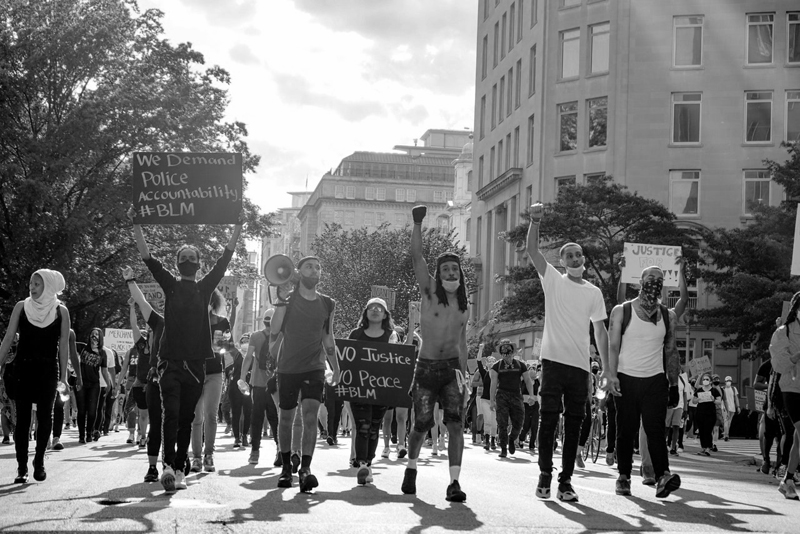
A recurring frustration in public discourse is the way violence in Black communities is often framed as proof of inherent moral failure, while broader structural and historical influences are minimized or ignored.
Critics argue that this framing is not accidental. It redirects attention away from systemic questions and narrows the conversation to individual blame alone.
That is why some continue asking a deeper question: what about institutional and elite instigation of the conditions that feed violence?
This line of thought points to several historical and social factors that shaped instability in Black communities over time.
These include the weakening of family structures, the dismantling of Black empowerment movements, the spread of narcotics in vulnerable neighborhoods, and the role of media and entertainment in normalizing destructive behavior.
Together, these forces are seen not as isolated accidents, but as part of a broader process that contributed to long-term damage.
According to this perspective, once open racial oppression became less acceptable publicly, new methods emerged that were more indirect and harder to prove at a glance.
Instead of overt mob violence, the damage could be carried forward through policy, economics, institutional behavior, manipulated social conditions, and media narratives.
In that sense, racism did not disappear. It became more sophisticated in how it expressed itself.
Another important group in this discussion is the majority of ordinary people who grow up around instability but do not participate in crime.
These are the spectators, the innocent bystanders, the law-abiding residents, and the people who still suffer the consequences of violence in their neighborhoods.
They may lose family members, friends, or peace of mind while still being unfairly stereotyped by outsiders as if they are the same as the small percentage committing harm.
For these people, the reality is more complex: they can criticize the misguided perpetrators while also recognizing the deeper structures that helped shape the environment.
The text also draws a clear distinction between real leadership and people who present themselves as powerful while ultimately functioning within a destructive pattern.
In this view, street figures who gain status through crime are not builders or visionaries. They are participants in a cycle that benefits forces far above them.
What may look like power at the local level can still be a form of manipulation from the top down.
A major part of the critique is directed at conservative pundits and media figures who are seen as defending elite interests by redirecting public debate.
According to this argument, they use familiar rhetorical tactics whenever police violence or racial injustice becomes part of the national conversation.
One tactic is the strawman—misrepresenting the opposing argument in order to make it easier to dismiss.
Another is diversion—shifting from the specific issue being discussed to another issue in order to deflect accountability.
A third is what the text describes as playing dumb: pretending not to understand or acknowledge the institutional influences that complicate the simple talking point.
The broader concern here is narrative control.
When one side repeatedly frames violence in Black communities only as a matter of personal failure, while refusing to acknowledge structural influence, it shapes how the public interprets the issue.
Over time, this kind of framing can make deeper analysis seem unnecessary or even irrational, even when that deeper analysis is essential.
The closing idea is that the real “game” is not only happening at street level.
There is also a corporate, institutional, and media-level game being played—one that involves shaping public belief, defending powerful interests, and keeping the conversation focused away from systemic causes.
In that sense, the visible conflict on the ground is only part of the picture. The quieter game is the one played through power, messaging, and influence.
The central argument is not that only one group is responsible. It is that public understanding remains incomplete if responsibility is assigned only at the lowest visible level.
To understand the full picture, one must look at perpetrators, spectators, and instigators alike—while also questioning the narratives that keep deeper causes out of the spotlight.
Real analysis begins when people stop accepting the easiest explanation and start asking who benefits from keeping the conversation shallow.
Looking deeper than the headline is how people begin to see the full game.